In-Person

All Trees Bear Witness: Colonial Histories, Climate Breakdown, and Sonic Experiments in Silvic Storytelling (Film Screening & Discussion)
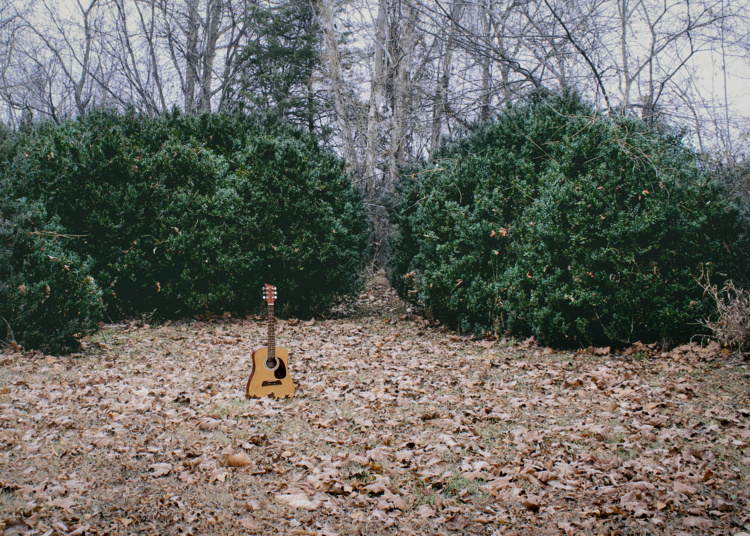
Artistic photo of guitar, leaves and trees

This event has passed.

This event is free and open to the public, but registration is required. The October 2 film screening and discussion will take place  in Room HQ L01 in the Humanities Quadrangle (320 York Street, New Haven).

All Trees Bear Witness: Colonial Histories, Climate Breakdown, and Sonic Experiments in Silvic Storytelling is a two-part program which explores narratives of colonialism and climate change through the biodata sonification of witness trees—woody subjects who have experienced significant events in history. The program recognizes trees as affective beings capable of communicating not only their aliveness, but also their experience of events that occur within and against their ecosystems across varying temporalities. All Trees Bear Witness approaches these silvic stories through artistic applications of biodata sonification. That is, through the use of specialized devices which translate the biological processes of an organism into sound. The novel approach presents humans with opportunities for deep listening engagement with the more-than-human and even for interspecies musicking.

All Trees Bear Witness ultimately asks: if humans better comprehended what trees communicate about the roots of the accelerating climate crisis, would we listen?

The program includes the premiere of musician-folklorist Daniel Bachman’s film, The Witness Tree; a discussion moderated by convener Tyler Mark Nelson with two multidisciplinary artists of Virginian roots—cultural worker Cliff Chambliss, III, and scientist Willow Gatewood; and an outdoor biodata sonification workshop led by Willow Gatewood inviting participants to listen to the life processes and storytelling of New Haven trees.

The Friday evening portion of this event begins with the debut of Daniel Bachman’s film, The Witness Tree, a meditative investigation of the intersections of history, power, people, and place. He interviews sixteen trees within the historic boundaries of colonial Virginia, much like a folklorist would gather stories for an oral history project. Each tree is recorded using sensors that measure respiration, gas exchanges, and water control. This data is converted to MIDI and integrated into Bachman’s compositions of guitar drones, environmental audio, and archival sound collage. From these silvic stories emerges a direct connection between colonialism and contemporary climate breakdown.

Among the sixteen trees are a thousand-year-old baldcypress that grew in the land before European colonization; a Southern catalpa at Chatham Manor described in a Walt Whitman poem after the Battle of Fredericksburg; the last surviving basswood in Charlottesville that was present to the 1924 unveiling of the Robert E. Lee monument, the Unite the Right white supremacist rally in 2017, and the Lee monument’s eventual removal in 2021; the Emancipation Oak at Hampton University, where the first Southern reading of the Emancipation Proclamation occurred in 1863; and a dogwood at the edge of the blast zone for the Mountain Valley Pipeline. Interviews with humans are also included in the film.

Bachman’s The Witness Tree seeks to expand the ways that witness trees are classified, both as subjects who lived through historical narratives (like those often targeted or censored by colonial powers) and as modern-day witnesses to the defining experiences of our time. “All trees are witness trees,” he writes in the liner notes of the album accompanying this film.

A reception follows the film, after which Tyler Mark Nelson will moderate a discussion with two multidisciplinary artists: Cliff Chambliss, III and Willow Gatewood. Both are natives of Virginia and have personal connections to the histories and places featured in The Witness Tree. Their conversation will cover the themes raised by Bachman’s film, including the relationships between trees and humans, the possibilities for more-than-human oral history projects, and the role of art in communicating complex realities.

On Saturday, Willow Gatewood will facilitate a biodata sonification workshop among the trees at the Farnam Memorial Gardens. This outdoor sonic experience will invite participants to mindfully investigate their entanglements with the more-than-human world while considering the silvic stories in New Haven and across New England. All are welcome to register. Due to limited space, the workshop will be capped at 25 people. Persons whose interests relate to ecological sound/art/design, religion and ecology, multispecies studies, environmental humanities, and similar subjects are especially encouraged to register. View workshop details and registration here.

This event is convened by Tyler Mark Nelson. Speakers and artists include Daniel Bachman, Cliff Chambliss, III, and Willow Gatewood, the latter of whom also facilitates the Saturday biodata sonification workshop. Co-sponsored by the Institute of Sacred Music’s Religion, Ecology, and Expressive Culture Initiative and Yale Environmental Humanities.

Speakers:

  • Daniel Bachman
  • Cliff Chambliss, III
  • Willow Gatewood
  • Tyler Mark Nelson

Contact: Katya Vetrov

Bios:

Daniel Bachman

Daniel Bachman is an artist, musician, and independent scholar primarily interested in the folk histories of Virginia. Bachman has released fourteen full length records since 2011, and toured extensively internationally and throughout the US, garnering wide acclaim. Select performances include the NPR Tiny Desk Concert, Pitchfork Festival, and Solid Sound Festival, as well as a New York Climate Week exhibit at the Empire State Plaza and NY State Capitol. In recent years Bachman has abandoned a rigorous touring schedule to explore multimedia projects centered on Virginia’s long history of settler colonialism and how it relates to contemporary climate breakdown. He currently lives in Madison County, Virginia, with his partner Aldona Dye and their cat, Little Baby.

Clifford Chambliss III

Clifford B. Chambliss, III, is a multidisciplinary artist and cultural worker. Through the mediums of photography, fiber, stained glass, and performance, he explores narratives of the Black American experience, religious iconography/symbolism, and bold political messaging. His works are in the collections of the Virginia Museum of Fine Arts, Black History Museum of Virginia, Beinecke Rare Book & Manuscript Library, and private collectors. Currently, Cliff works for the United States Copyright Office, guiding authors, artists, and attorneys in protecting creative works of art and fielding correspondence about copyright law and policies. He is a former Assistant Scoutmaster with the Boy Scouts of America, which serves as the foundation of his interest in youth ministry, environmental justice, and eco-spirituality. A native of Richmond, Virginia, Cliff is a graduate of Yale Divinity School, The Catholic University of America School of Law, and Hampton University. He is a member of The Copyright Society of the U.S., American Glass Guild, and Kuumba Quilters Guild.

Willow Gatewood

Willow Gatewood is an environmental scientist, interdisciplinary artist, and storyteller from the United States. New media, sound, and performance weave science, gender and social issues with an autobiographical exploration of nature, and it is their passion to inspire reverence for the more-than-human realm. Their research practice explores relational technologies, ecologicizing AI, and living systems as models for constructed environments and regenerative societies. Willow’s work has been featured in publications including Ambient Receiver | Journal of Creative Ecologies, Grand | The Journal of One Grand Books, and the Rachel Carson Council’s website, among others. They have performed at festivals including Earth Celebrations Ecological City, NYC, Deep Water Literary Festival (‘22, ‘23, and ‘24), and at the MonViso Institute in Ostana, Italy. Their poetry collections, tangerine and Salt, are published by Bottlecap Press, LA, and they recently released a more-than-human future-ambient album, Plant Music for Tea Parlours, with Agami Records. Currently, they reside as an Art for Peace artist at Hillhaus, Yanqing, Beijing. As an independent educator, they teach new media and sound through the lens of the more-than-human and often lead workshops in environmental art and biological imagination.

Tyler Mark Nelson

Tyler Mark Nelson is an interdisciplinary scholar, educator, and artivist. Entwined through his work are themes of eco-emotions, multispecies apocalypse, and transformational resilience during planetary polycrisis. Current projects of his explore the potential for music and sound art to raise ecological consciousness, facilitate collapse-aware catharsis, and catalyze social change. Tyler works as a producer/editor for Earthkeepers, a Circlewood podcast promoting global connection among ecological-minded people for planetary restoration. He also develops strategic underwriting partnerships at WPKN 89.5FM, a freeform radio station, and hosts the monthly music program, Earth Mixtape. Tyler serves on the Board of Trustees at The BTS Center, where he previously designed programs for leaders addressing the effects of climate change within their communities. Formerly he was program director of the Living Earth Community online knowledge commons at the Yale Forum on Religion and Ecology. Tyler is a graduate of Yale Divinity School and Whitworth University. Originally from Minnesota, Tyler now lives in Connecticut with his wife, friends, and community.